Why California Private Estate Weddings Lend Themselves to Film Photography

Wedding photography is often described as either documentary or editorial. The distinction can feel sharp on paper. One suggests observation and unscripted moments. The other implies structure, composition, and aesthetic direction.
In reality, most meaningful wedding imagery exists somewhere between the two.
For me, the line is not about choosing one approach over the other. It is about understanding when to step back and when to refine.
The Rhythm of a Private Estate
Private estates rarely feel hurried. There is space between moments. Guests move organically through the property. Portraits can happen in quiet corners rather than designated photo areas.
Film photography benefits from this slower rhythm.
It encourages intention. It rewards patience. It responds to natural light rather than artificial staging. In estate environments, light shifts gradually across architecture and landscape, creating layered depth that film retains beautifully.
California Light and Tonal Depth
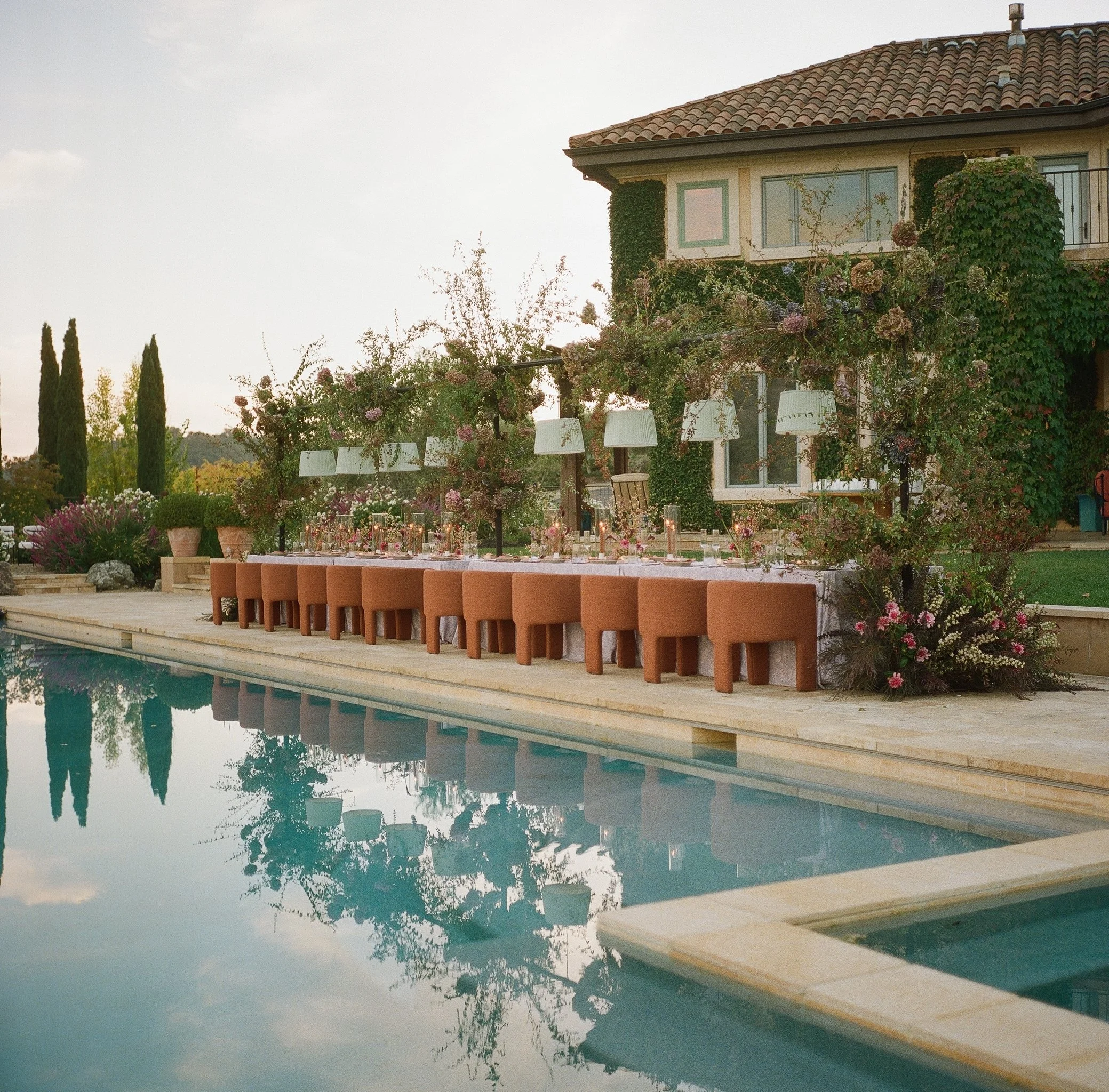
California light is distinct. In wine country and coastal regions, it often arrives warm but soft. In hillside estates, it changes gradually through elevation and open sky.
Film retains subtle tonal transitions in this kind of light. Highlights remain luminous without becoming harsh. Shadows hold texture rather than flattening.
In estate settings, where neutral palettes and natural materials dominate, this tonal sensitivity creates imagery that feels cohesive rather than overly processed.
For couples planning celebrations in Napa or Sonoma, this relationship between light and environment becomes especially important.

Architecture That Invites Restraint
Private estates often feature Mediterranean, Spanish, or contemporary architecture. Clean lines. Textured walls. Open archways.
These spaces do not require dramatic posing or aggressive direction. The architecture already offers framing. The landscape already creates atmosphere.
Film photography complements this restraint. It does not overpower the space. It responds to it.
Rather than producing spectacle, the imagery feels grounded in its surroundings.
Editorial Without Excess
Estate weddings tend to attract couples who value design, privacy, and aesthetic coherence. The setting often reflects their personal taste.
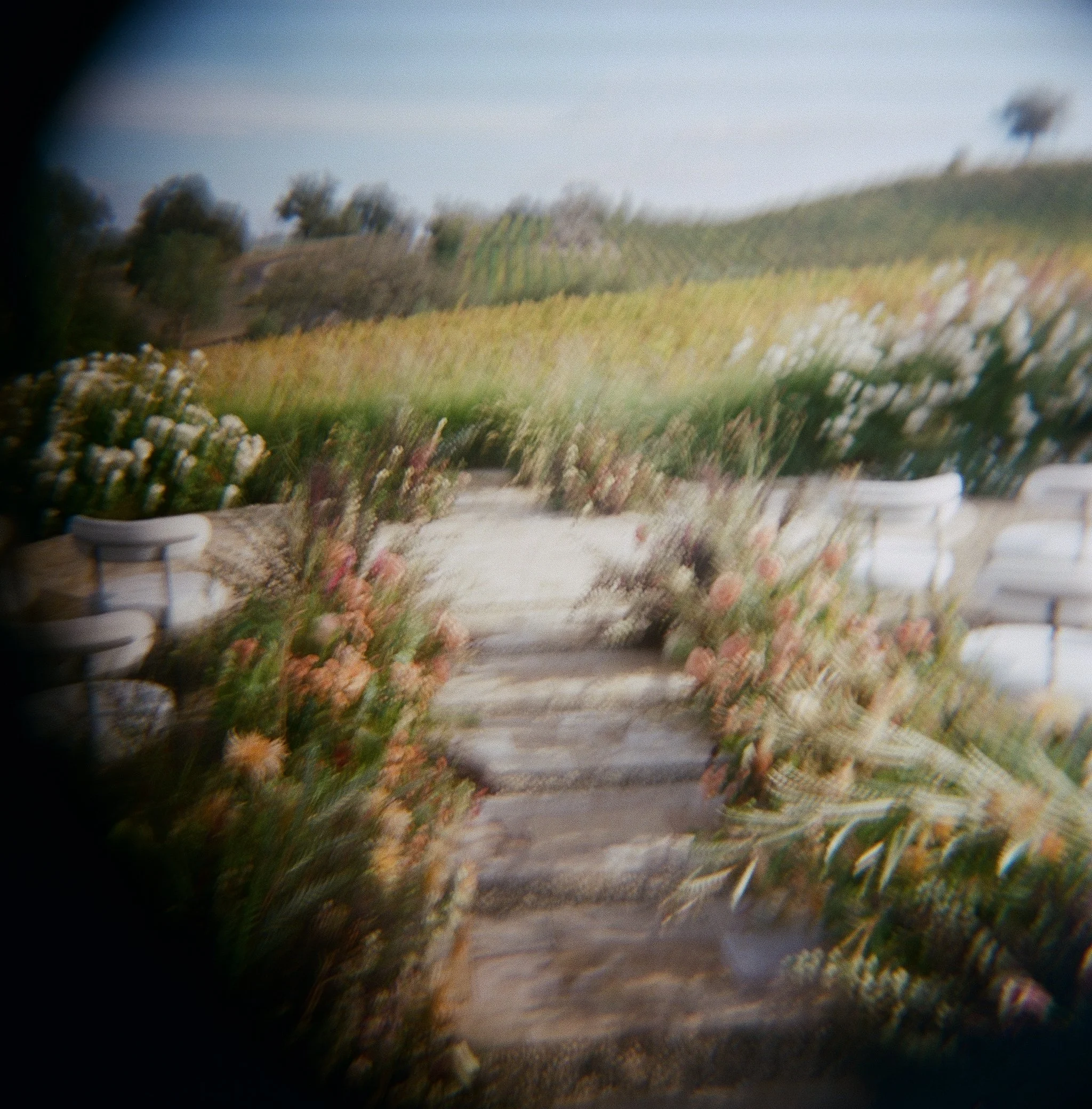
Film aligns naturally with this mindset. It supports editorial refinement without feeling artificial. It preserves authenticity while elevating composition.
The result is photography that feels intentional but not constructed.

Privacy and Presence
Many private estate weddings are deeply personal. Guest counts may be smaller. Celebrations may stretch across an entire weekend.
This intimacy benefits from a documentary-led approach on film. Moments are allowed to unfold without intrusion. The camera observes rather than directs.
In environments where privacy matters, subtlety becomes essential.
Why the Setting and Medium Align
Film is not about nostalgia. It is about depth.
Private estates offer layered landscapes, natural textures, and evolving light. Film records these qualities with softness and nuance that suits the setting.
When space is allowed to breathe, photography can do the same.
For couples considering a private estate celebration in California, understanding how the environment shapes imagery can influence not just how the wedding looks, but how it feels to remember.
If you would like to see how this approach translates across California estate weddings, you can explore more here.

faqs
-
Private estates offer natural light, architectural depth, and a slower pace, all of which allow film to capture subtle tonal transitions and atmosphere.
-
Does film photography work better in outdoor California settings?
-
Are estate weddings more suited to documentary-style photography?
-
No. Film is intentionally used alongside digital when needed, ensuring reliability while maintaining tonal depth and cohesion.
-
Napa, Sonoma, Marin, and coastal California are well known for private estate celebrations due to their landscape and architectural character.